

” Our Lord finds our desires not too strong,but too weak. We are far too easily pleased.” -C.S. Lewis
” Our Lord finds our desires not too strong,but too weak. We are far too easily pleased.” -C.S. Lewis
AT THE WHEEL..
DID I DO THAT?!
-EVA SANTIAGO copyright 2012
I saw this article today and I had to share it on my blog . When my 17-year-old daughter was born, I received some of the wackiest advice from some well-meaning people. I had to ignore most of it though and go with my gut instinct. I even had my uncle who is a doctor, give me a wall clock so that I could put my new-born on a nursing schedule right away. Because he said, “You let that baby know who is in charge right away or she’ll ruin your life.” WOW! How could my baby, my flesh and blood ruin my life? 
So I defied all the advice that came from others and I listened to my instinct. This article about letting babies cry themselves into calm is fantastic. Back then I was 24 when I first had her. People would tell me to just let her cry and I’d think, ‘ Ok, adults can self soothe but a baby can’t because they NEED someone there to help them LEARN to calm themselves.’ It was THAT apparent to me. So I asked my husband one day if he thought it right to let a baby cry and cry until they “get over it”. His response was simple,” When you’re upset and you come to me and ask me to comfort you, what would happen if I ignored you or told you to get over it? You’d be more upset right?” Bingo! So I never listened to anyone’s comments, I followed my instinct and soon I realized moms and dads DO know best when it comes to their kids!
Letting babies “cry it out” is an idea that has been around since at least the 1880s when the field of medicine was in a hullaballoo about germs and transmitting infection and so took to the notion that babies should rarely be touched (see Blum, 2002, for a great review of this time period and attitudes towards childrearing).
In the 20th century, behaviorist John Watson, interested in making psychology a hard science, took up the crusade against affection as president of the American Psychological Association. He applied the mechanistic paradigm of behaviorism to child rearing, warning about the dangers of too much mother love. The 20th century was the time when “men of science” were assumed to know better than mothers, grandmothers and families about how to raise a child. Too much kindness to a baby would result in a whiney, dependent, failed human being. Funny how “the experts” got away with this with no evidence to back it up! Instead there is evidence all around (then and now) showing the opposite to be true.
Don’t these attitudes sound familiar? A parent reported to me recently that he was encouraged to let his baby cry herself to sleep so he “could get his life back.”
With neuroscience, we can confirm what our ancestors took for granted—that letting babies cry is a practice that damages children and their relational capacities in many ways for the long term. We know now that letting babies cry is a good way to make a less intelligent, less healthy but more anxious, uncooperative and alienated person who can pass the same or worse traits on to the next generation.
The discredited behaviorist view sees the baby as an interloper into the life of the parents, an intrusion who must be controlled by various means so the adults can live their lives without too much bother. Perhaps we can excuse this attitude and ignorance because at the time, extended families were being broken up and new parents had to figure out how to deal with babies on their own, an unnatural condition for humanity–we have heretofore raised children in extended families. The parents always shared care with multiple adult relatives.
According to a behaviorist view completely ignorant of human development, the child ‘has to be taught to be independent.’ We can confirm now that forcing “independence” on a baby leads to greater dependence. Instead, giving babies what they need leads to greater independence later. In anthropological reports of small-band hunter-gatherers, parents took care of every need of babies and young children. Toddlers felt confident enough (and so did their parents) to walk into the bush on their own (see Hunter-Gatherer Childhoods, edited by Hewlett & Lamb, 2005).
Ignorant behaviorists then and now encourage parents to condition the baby to expect needs NOT to be met on demand, whether feeding or comforting. It’s assumed that the adults should ‘be in charge’ of the relationship. Certainly this might foster a child that doesn’t ask for as much help and attention (withdrawing into depression and going into stasis or even wasting away) but it is more likely to foster a whiney, unhappy, aggressive and/or demanding child, one who has learned that one must scream to get needs met. A deep sense of insecurity is likely to stay with them the rest of life.
The fact is that caregivers who habitually respond to the needs of the baby before the baby gets distressed, preventing crying, are more likely to have children who are independent than the opposite (Stein & Newcomb, 1994). Soothing care is best from the outset. Once patterns get established, it’s much harder to change them.
We should understand the mother and child as a mutually responsive dyad. They are a symbiotic unit that make each other healthier and happier in mutual responsiveness. This expands to other caregivers too.
One strangely popular notion still around today is to let babies ‘cry it out’ when they are left alone, isolated in cribs or other devices. This comes from a misunderstanding of child and brain development.
What does ‘crying it out’ actually do to the baby and to the dyad?
Neurons die. When the baby is stressed, the toxic hormone cortisol is released. It’s a neuron killer. A full-term baby (40-42 weeks), with only 25% of its brain developed, is undergoing rapid brain growth. The brain grows on average three times as large by the end of the first year (and head size growth in the first year is a sign of intelligence, Gale et al., 2006). Who knows what neurons are not being connected or being wiped out during times of extreme stress? What deficits might show up years later from such regular distressful experience?
Disordered stress reactivity can be established as a pattern for life not only in the brain with the stress response system, but also in the body through the vagus nerve, a nerve that affects functioning in multiple systems (e.g., digestion). For example, prolonged distress in early life, resulting in a poorly functioning vagus nerve, is related disorders as irritable bowel syndrome (Stam et al, 1997). See more about how early stress is toxic for lifelong health from the recent Harvard report, The Foundations of Lifelong Health are Built in Early Childhood).
Self-regulation is undermined. The baby is absolutely dependent on caregivers for learning how to self-regulate. Responsive care—meeting the baby’s needs before he gets distressed—tunes the body and brain up for calmness. When a baby gets scared and a parent holds and comforts him, the baby builds expectations for soothing, which get integrated into the ability to self comfort. Babies don’t self-comfort in isolation. If they are left to cry alone, they learn to shut down in face of extensive distress-stop growing, stop feeling, stop trusting (Henry & Wang, 1998).
Trust is undermined. As Erik Erikson pointed out, the first year of life is a sensitive period for establishing a sense of trust in the world, the world of caregiver and the world of self. When a baby’s needs are met without distress, the child learns that the world is a trustworthy place, that relationships are supportive, and that the self is a positive entity that can get its needs met. When a baby’s needs are dismissed or ignored, the child develops a sense of mistrust of relationships and the world. And self-confidence is undermined. The child may spend a lifetime trying to fill the inner emptiness.
Caregiver sensitivity may be harmed. A caregiver who learns to ignore baby crying, will likely learn to ignore the more subtle signaling of the child’s needs. Second-guessing intuitions to stop child distress, the adult practices and increasingly learns to “harden the heart.” The reciprocity between caregiver and babu is broken by the adult, but cannot be repaired by the young child. The baby is helpless.
http://www.psychologytoday.com/blog/moral-landscapes/201112/dangers-crying-it-out
Please refer back to my earlier posts and read what this challenge is about so that the later posts make sense 🙂
Day 21 Question #21: What is the greatest lesson your children have ever taught you?
Answer: The one thing I have learned after all these years of raising kids is how amazingly resilient their spirits are. When something bad happens they shrug it off more readily and easily than adults. I have asked my kids through the years to think back about when we were going through a rough spot, as a family or in my marriage to their dad. Their answers amaze me because I used to think that they would remember all the bad stuff in detail. Their answers that reflect that even though they knew times were bad, they took the good memories and cling to them. With the not so good things, they talk about it candidly and even laugh about some of the outlandish things they’ve seen.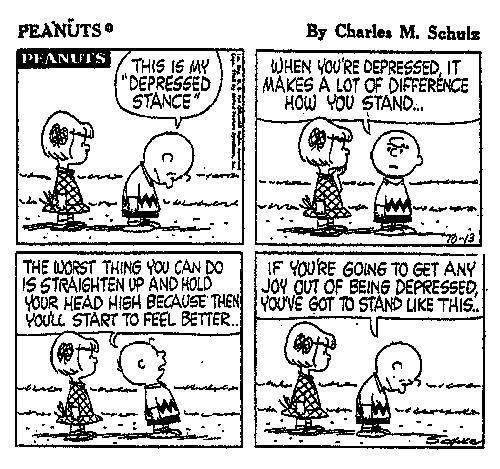
A child’s bounce back ability is so amazing to me. I have seen each of my kids go through a terrible disappointment and be completely heart-broken and frustrated, only to shrug it off the next day. They move on quickly where adults linger in things that ought be discarded. That’s one of the biggest things I have learned from my kids. If things don’t happen like I thought they were going to, I follow their example; cry, shrug and move on.

Please refer back to my earlier posts and read what this challenge is about so that the later posts make sense 🙂
Day 19 Question #19: What is one of the super unique aspects of your own family today?
Answer: I had to think hard on this one because there are several dynamics that make my family stand out in a crowd. I believe a key aspect though is the fact that my husband is twenty years my senior. That has played a major role in our evolving as a family unit. I have been told by close friends that the way we are rasing our kids, resembles something more out of the 1950’s landscape than 2011. We are one of those rare modern families that with God‘s favor and grace, can live on a single income which allows me to stay home so I can educate our kids. Yes, it’s tough at times going without some of the extra things we THINK might make us happy. But in the end stuff has to take a back seat to nurturing and educating our future. 
Another interesting side note is that my husband’s “old school” morals and mine came from two different places. His came from the era he was raised in . Mine came from having been born in another country and having been raised by two people who kept the traditions of our country of origin and instilled them in me in a new culture and society.
Secondly the 20 year difference in our marriage enhances our kid’s education in ways I’d never imagine. They are exposed to several very different time periods; being that my husband is a baby boomer, our kids are more familiar with the culture that he grew up in than their peers. Just for an example, ask my kids about Red Skelton,  Nat King Cole,
 I Love Lucy, and a lot of the music and pop culture of the ’60’s and they can tell you in detail.Most kids their age, draw a complete blank. I was a product of the 1980’s culture so they are thoroughly familiar with a lot of the fashions, music and pop culture of that era too.

So the bridging the gap between two very different and unique eras has helped to shape and mold our family into who we are today.
Please refer back to my earlier posts and read what this challenge is about so that the later posts make sense. 🙂
Day 4 Question #4: What is the greatest compliment you’ve ever been paid?
Answer: In the early ’90’s I worked at a museum in Atlanta. The museum director, Lillian and I got along great. One day she asked me to do something extra in order to promote the museum. She told me I had the option to say no and that would be fine too. Lillian asked me if I would make an exhibit using flowers to enter in the Atlanta Flower Show.

I was taken aback at first since I didn’t consider myself a “pro” at working with flowers. Then I thought about how I had worked with flower arrangements at home so I figured I’d give it a try. The job was to make an arrangement that resembled the burning of Atlanta during the Civil War. Once I accepted the challenge Lillian stood back and looked at me then she said,” Wow! You’re simply amazing!” I laughed as I asked her,” What do you mean?” The comment caught me by surprise. Then my boss said,” I have never met someone who exudes so much self confidence. It’s almost as if you can do anything that comes your way, because you never let anything or anyone get in your way.” THAT, blew me away because at the time I didn’t think much of myself. I thanked her as we hugged and I went off to plan the exhibit. Words like that stay with a person 🙂
I was inspired this morning to start a 30 day Blog Challenge. The questions are from an interesting little book I picked up a while ago at a thrift store. THE MOM & DAD QUESTION, CREATIVE QUESTIONS to HONOR the FAMILY by Bret Nicholaus and Paul Lowrie. I will post one question per day and I will give you an answer that came from times of our discussing this little book at our family‘s dinner table. I look forward to my reader’s responses, so YES by all means leave me YOUR answers in the comments section of this blog. Since The Holidays are coming up, maybe you can pick up your own copy of this book and bring it to your own family’s holiday celebrations 
Day 3 Question # 3: Is there anyone you know of in your family’s history who had an encounter with or knew someone famous?
Answer: Here is an excerpt from my book  AS CLEAR AS CLAIRE GETS, A CONVERSATION with the PAST that tells of how my mama met the president of Colombia.
When Fidel was 8 years old, papa and mama only had 2 children at the time . Mama studied to become a legal secretary and after she met papa, he told her that he didn’t want her to work outside the home.Mama went against his wishes and she began to prepare herself studying at home in secret. Not too long after that she heard that the president of Colombia, Carlos Lleras Restrepo was going to make a public appearance at a rally in one of the towns surrounding Medellin. So she took my 2 brothers, Fidel and Alejandro with her because she wanted to speak to the president.
Once they arrived at the hall where they scheduled to hold the rally, the crowd was growing by the minute because everyone was anticipating the president’s arrival. once President Lleras Restrepo arrived, the military saluted him by playing Colombia’s national anthem and the whole place charged up with excitement as shouts went out in honor of the president. Mama stood at the front of the auditorium and she and my brothers waited for him to come close. Then she walked up to him as he stood directly in front of Mama and my brothers. Then she said in a dignified and respectful tone,
“Mr. president, I need to speak with you sir.” Suddenly she was rudely interrupted by a security guard who barked at her,
” Lady, you are too close. Please step back.” Mama was undaunted by his intimidating manner and she pressed on.
” Mr. president, sir, if you could give me a few minutes of your time… I must speak to you.” Again, she was pushed back and threatened by the same security guard. All of a sudden, the president intervened and spoke to my mama, saying to her in a warm and friendly tone,
” Yes ma’am and what may I help you with at this moment?” Mama must have been thrilled at his acknowledgement but she kept on in her professional manner, never forgetting whom she was standing before,
“Well sir, I’d like to meet in private with you for a few minutes if that’s all right with you.” The president stopped to think for a minute; then he nodded as he reached into the pocket of his coat and retrieved his business card. He turned it over and wrote down some words as he told mama,
” Ma’am, I look forward to meeting with you this afternoon at three at The Hotel Nutibara, which is where I’m staying.”
That afternoon my Mama showed up at three for her interview with President Lleras Restrepo. After their brief meeting, he recommended Mama to Governor Octavio Arizmendi Posada who was the governor of the state of Antioquia. After a few days of enduring challenging exams, Mama landed a job working as an executive secretary of the treasury in the governor’s office in the state of Antioquia.

This world has grown completely insane. A person tries to spread a little love around only to get slapped in the face. A while ago, my oldest daughter tried to be nice to a younger girl who was in line to buy some candy at The Dollar Store. The girl didn’t have enough for her purchase, so my girl gave her a dollar. The other girl was just about to take it when her mom stepped in and scolded her daughter for taking it. My daughter gave me a puzzled look and the girl’s mom gave us both dirty looks as if to say,” We aren’t charity cases, so keep your money ‘cuz we don’t need it.”
Then there was a time when I was at the grocery store and the young woman in front of me was short of money for her groceries; I had a few single bills and I offered them to her and with her snooty nose stuck way up high in the air she said in a chilly tone of voice,” No thanks but I got it.” Yeah right! She had to put some of her items back.
The whole world is upside down crazy. I was kind to a kid, one of my kid’s friends. Her mother went ballistic on me and she had her kid cut off all ties with my family. WTH? Love offends now probably just as worse or maybe worse than in the days when Yeshua walked with us. He told His followers that others would know they are His followers because of their LOVE. It seems like in these days people would rather that you cuss ’em out than you lift a hand to bless them.
Are these the days that try men’s souls? It seems so to me. What do you think?
I was inspired this morning to start a 30 day Blog Challenge. The questions are from an interesting little book I picked up a while ago at a thrift store. THE MOM & DAD QUESTION, CREATIVE QUESTIONS to HONOR the FAMILY by Bret Nicholaus and Paul Lowrie. I will post one question per day and I will give you an answer that came from times of our discussing this little book at our family‘s dinner table. I look forward to my reader’s responses, so YES by all means leave me YOUR answers in the comments section of this blog. Since The Holidays are coming up, maybe you can pick up your own copy of this book and bring it to your own family’s holiday celebrations
Day 2 Question #2: When you were growing up, what was dinner time like at your house? What was a typical meal?
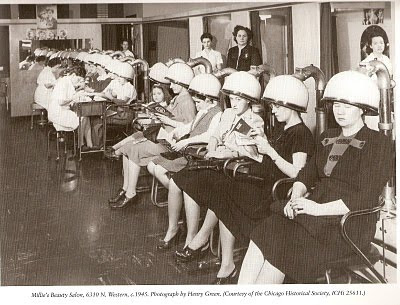
Answer: This answer is from my husband. ” Mom always had bread at the table along with meat, veggies and mashed potatoes. Mom always said that a birdie had told on one of us whenever she suspected that we were misbehaving or acting up. Since my mom owned a beauty shop, the conversation always centered around the gossip she had heard that day at work.”
 Eva Santiago